
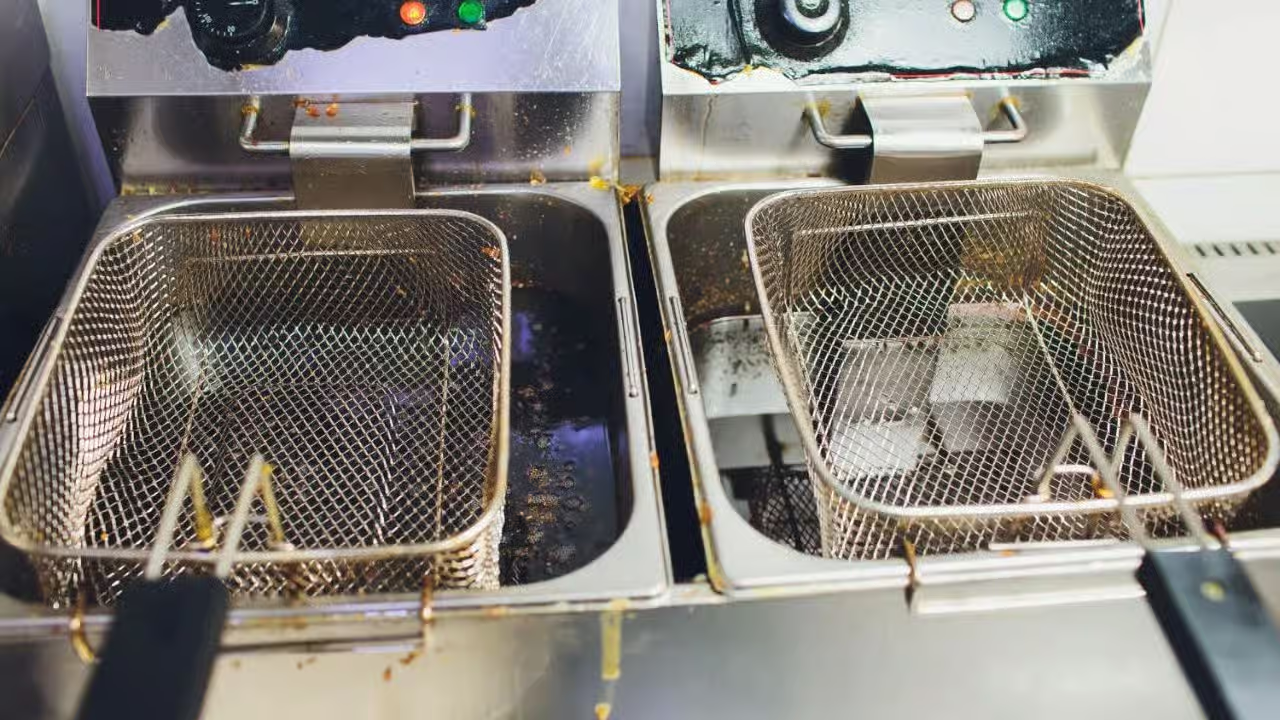
In the culinary world, particularly in establishments where deep frying is a staple cooking method, maintaining oil quality is paramount. The longevity of frying oil not only affects the taste and texture of food but also has significant economic and environmental implications. Proper deep fryer oil filtration emerges as a crucial practice that enhances oil longevity, ensuring consistent food quality while reducing costs and waste.
Deep frying involves submerging food in hot oil, which cooks it quickly due to high temperatures. This process can introduce various impurities into the oil, including food particles, carbon residues from burnt items, and water from frozen or wet foods. Over time, these contaminants degrade the oil’s quality by altering its chemical composition. This degradation manifests as off-flavors in fried foods and changes in color and viscosity of the oil itself.
Implementing an effective filtration system helps mitigate these issues by removing unwanted particles before they have a chance to break down further. Regular filtration extends the life of cooking oils by maintaining their integrity for longer periods. By filtering out debris regularly, restaurants can preserve the desirable properties of their oils—such as flavor neutrality and optimal smoke point—over multiple uses.
The benefits of proper oil filtration are multifaceted. Economically speaking, extending the life of fryer oil reduces the frequency with which establishments must replace it—a cost-saving measure that accumulates significantly over time given how often large quantities are used in commercial kitchens. Furthermore, efficient use of resources aligns with sustainable practices by minimizing waste production associated with frequent disposal.
From a health perspective too; cleaner oils mean fewer breakdown products like acrylamide—a potentially harmful compound formed when starchy foods are cooked at high temperatures—and other oxidized materials entering consumers’ meals via absorption during frying processes.
To achieve optimal results through Deep fryer oil filtration systems require regular monitoring alongside adherence to best practices such as skimming surface debris post-frying sessions or using appropriate filters designed specifically for this purpose within machines themselves (e.g., paper filters versus more advanced mechanical options).
Moreover investing initially into high-quality equipment pays dividends long-term both financially environmentally since better-designed units typically offer superior performance thus necessitating less frequent replacements overall compared cheaper alternatives might seem appealing upfront but ultimately prove costly due lack durability effectiveness under heavy usage conditions common busy kitchens worldwide today increasingly aware importance integrating eco-friendly solutions wherever possible without compromising product standards customer satisfaction levels either side equation thereby reinforcing commitment excellence across board simultaneously benefiting bottom line planet alike!